
Some fading between color appointments is completely normal, but your everyday routine can greatly affect how quickly your color changes and how it looks along the way.
Created in collaboration with Chloe, hairstylist at Hello Hair Co.
Quick Answer
Yes, some color fading between appointments is normal. Sun exposure, swimming, hard water, hot shower water, frequent heat styling without heat protectant, and the products you use can all affect how quickly your color loses vibrancy or starts looking dull or brassy. Some colors, especially reds and vivid shades, also tend to fade faster than others.
When a client tells Chloe, “My color fades so fast,” her first response isn't automatically to recommend another color service.
It's usually: “What's going on?”
She wants to know what's happening in that client's everyday life. Sometimes keeping your color looking its best between appointments starts with figuring out what's changed.
Key Takeaways
- Some fading between hair color appointments is completely normal.
- Reds and vivid colors can require more maintenance because they tend to fade faster.
- Hot water, heat styling, sun exposure, swimming, and your home water can all affect your color.
- Color-safe shampoo and appropriate at-home products matter more than many clients realize.
- A glaze can refresh shine and color without redoing your entire color service.
- How often you should wash your hair depends on your hair, not a universal rule.
- You don't have to avoid swimming, being outside, or doing the things you enjoy just to protect your hair color. Understanding how these things affect your hair helps you and your stylist create a better maintenance plan.
Some Hair Color Fading Is Normal
One of the first things Chloe wants clients to understand is that color changes between appointments.
That doesn't automatically mean something went wrong.
Depending on your color, you may notice it becoming less vibrant, looking a little duller, or developing warmer or brassier tones over the weeks. Your everyday routine and environment can speed up that process, especially during the summer when many of us spend more time outside or in the water.
Certain colors can also require more maintenance than others. Chloe finds that reds and vivid shades tend to fade especially quickly when they aren't cared for properly at home.
So when you're choosing a new color, it's worth talking about more than how you want it to look on the day of your appointment.
Ask what it's going to look like six weeks later, too.
When Your Color Suddenly Changes, Chloe Starts Asking Questions
A client recently came to Chloe because her hair seemed to be fading much faster than normal.
Her hair was around a level 7 or 8 and had started turning noticeably more golden between appointments.
Rather than assuming the color itself was the problem, Chloe started asking about the client's life.
Had anything changed in her routine? Had she been swimming more? Spending more time outside?
It turned out she'd been spending a lot of time at the lake that summer.
That gave Chloe useful information.
At the client's normal color appointment, Chloe added a glaze to refresh the color and sent her home with a color-depositing conditioner to use between appointments, particularly after spending time at the lake.
This is why Chloe's response to “My color never lasts” is often simply: “What's going on?”
Sometimes the answer isn't that you suddenly need a completely different color service. Something in your routine may have changed, and figuring that out gives your stylist a much better place to start.
Your Shower Can Affect Your Hair Color
One of the simplest places to look is your shower.
Chloe recommends using a shampoo designed for color-treated hair and paying attention to your water temperature.
Very hot water isn't ideal when you're trying to preserve your color. Chloe generally recommends lukewarm water for color-treated hair, while clients with vivid colors may need even cooler water to help maintain their color as long as possible.
The products you're washing with matter too.
Using whatever shampoo happens to be in the shower can work against the color you're paying to maintain. Chloe recommends color-safe shampoo and conditioner and may suggest additional at-home products depending on your particular color.
That doesn't mean everyone needs an elaborate six-product routine.
It means your home care should make sense for the service you had done.
How Often Should You Wash Color-Treated Hair?
There isn't one washing schedule that works for everyone.
Chloe herself has fine hair strands with medium density and typically goes about three to four days between washes. Someone with coarser hair may be comfortable going longer.
Your scalp, hair texture, density, lifestyle, and styling routine all matter.
Instead of trying to follow a universal rule you saw online, talk to your stylist about what's realistic for your hair.
If you're washing frequently because you exercise, swim, or simply prefer washing more often, tell them that too. Your stylist can make product and maintenance recommendations based on the routine you actually have, not the one you're supposedly supposed to have.
Heat Styling Can Fade Your Color Too
Heat protection isn't only about keeping your hair in good condition. Chloe also considers heat when she's trying to help a client preserve their color.
If you regularly use a flat iron, curling iron, or another hot tool at very high temperatures, your color may change faster.
Chloe generally likes to keep hot tools around 340–360°F when the hair and desired style allow, rather than automatically turning the tool all the way up.
And she always recommends heat protectant.
More heat won't automatically give you a better style. Your stylist can help you figure out the temperature and technique that are best for your hair type.
Summer Can Be Rough on Hair Color
Sun. Pools. Lakes. Salt water.
Summer is fun.
Your hair color may have some opinions about that.
Chloe notices more clients dealing with fading and unwanted tones during the summer because they're spending more time outside and in the water.
Chlorinated pools can be especially noticeable on lighter hair, and mineral buildup from hard or well water can also affect the way hair looks over time.
That doesn't mean Chloe wants you sitting inside all summer protecting your hair.
If you're going swimming, one of her practical recommendations is to wet your hair first and apply a leave-in conditioner before getting in the water. And if buildup becomes a problem, your stylist can use professional treatments to help remove unwanted buildup and tones.
If hard water is an ongoing issue at home, addressing the water itself may also be worth considering.
The point isn't to stop doing things you enjoy.
It's to give your stylist the full picture when something about your color starts changing.
At-Home Products Aren't an Optional Part of Color
One of the biggest misconceptions Chloe encounters is that at-home care doesn't really matter.
It does.
A great salon color isn't immune to everything that happens to your hair once you leave the building.
Chloe's three biggest priorities for maintaining color at home are straightforward:
- Use products made for color-treated hair.
- Use heat protectant and avoid unnecessarily high heat.
- Protect your hair from UV exposure when you're spending time outside.
Beyond those basics, recommendations should become more personalized.
For blondes dealing with brassiness, Chloe may recommend a toning product. For someone trying to maintain a particular tone or keep a color from looking dull, she may recommend a color-depositing conditioner.
The goal isn't to send every client home with the same products.
It's to figure out what your color needs between appointments.
Dull Color Doesn't Always Mean You Need to Redo Everything
This is an important one.
If your color starts looking dull between appointments, you don't necessarily need to repeat your entire service.
For clients who return every three or four weeks, an additional maintenance appointment may not make much sense.
But if you go three or four months between larger color appointments, Chloe may recommend a glaze or another color-refreshing treatment in between.
A glaze can restore shine, refresh color, and help address unwanted tones.
What it can't do is repair damaged hair.
That's an important distinction. Sometimes the problem is tone. Sometimes it's buildup. Sometimes the hair needs something entirely different.
Your stylist can help you figure out which one you're actually dealing with.
A Glaze Can Be the In-Between Appointment You Didn't Know You Needed
Highlight clients are a great example.
Maybe you love your highlights and don't need another full highlight appointment yet, but a couple of months later something just feels...off.
The color isn't as fresh. The tone has changed. The shine isn't quite there.
That may be a good time to talk to your stylist about a glaze.
Chloe likes glazes as an option between larger color services because they can refresh the finished color in much less time than repeating the entire appointment.
They're not a replacement for every color service, and they don't solve every hair problem.
But sometimes you don't need to start over. You just need a refresh.
Your Stylist Needs to Know What Your Real Life Looks Like
This is probably the thread running through all of Chloe's advice.
Hair doesn't exist in a vacuum between salon appointments.
You wash it. Style it. Go outside. Swim. Exercise. Travel. Change routines.
So if your color suddenly isn't behaving the way it normally does, tell your stylist what's been going on.
When Chloe starts asking questions, she isn't trying to interrogate you about whether you've followed every hair-care rule perfectly. She's trying to find the reason something changed so she can make a better recommendation.
Sometimes the solution might be changing a product.
Sometimes it's adjusting how you're using heat.
Sometimes it's a glaze between appointments.
And sometimes it's simply understanding that the color you've chosen requires more maintenance than another one would.
You don't need to build your entire life around your hair color.
In fact, Chloe's biggest takeaway is almost the opposite: Don't be afraid to do what you want; it's your hair.
Go to the lake. Swim. Spend time outside.
Just tell your stylist what's actually going on so you can figure out how to keep your hair looking the way you want it to.
Frequently Asked Questions
Color maintenance doesn't need to become another complicated routine to manage. Most of the questions Chloe hears come down to understanding what affects your particular color and knowing when something can be handled at home versus when it's worth coming back to the salon.
Is it normal for hair color to fade between appointments?
Yes. Some fading is a normal part of having color-treated hair. How noticeable it becomes depends on the type and shade of color, your hair, your home-care routine, and things like sun exposure, swimming, heat styling, and water quality. Reds and vivid shades can be especially prone to noticeable fading.
Does hot water make hair color fade faster?
Chloe recommends avoiding very hot water when you're trying to maintain color. Lukewarm water is generally a better choice, and she recommends cooler water for clients trying to preserve vivid shades. Your shampoo and other shower products matter as well, so use products appropriate for color-treated hair.
How often should I wash color-treated hair?
It depends on your hair. Chloe personally goes around three to four days between washes because she has fine, medium-density hair, while someone with coarser hair may comfortably wash less frequently. Your stylist can help you find a schedule that works with your hair, scalp, and lifestyle.
Can swimming make my hair color fade?
Swimming can affect your skin color, particularly if you're spending a lot of time in pools, lakes, or saltwater. Chloe recommends wetting your hair and applying a leave-in conditioner before swimming. If you notice buildup, discoloration, or unwanted tones afterward, your stylist can determine whether a professional treatment would help.
Why does my blonde hair start looking brassy between appointments?
The tone of blonde hair can change between appointments for several reasons, including environmental exposure, water, washing, and normal fading. Chloe may recommend an appropriate toning product for home use or a professional glaze when the color needs more of a refresh.
What is a hair glaze?
A glaze is a salon service that can refresh your existing color, add shine, and help adjust unwanted tones without necessarily repeating your entire color appointment. It can be particularly useful for clients who go several months between larger color services. A glaze changes the appearance and tone of the hair, but it doesn't repair hair damage.
Do I need a glaze between every color appointment?
No. If you already have color appointments every few weeks, there may be no reason to add another service. If you go several months between appointments and notice your color becoming dull or the tone changing, a glaze may be useful. Your stylist can tell you whether you actually need one.
About Hello Hair Co.
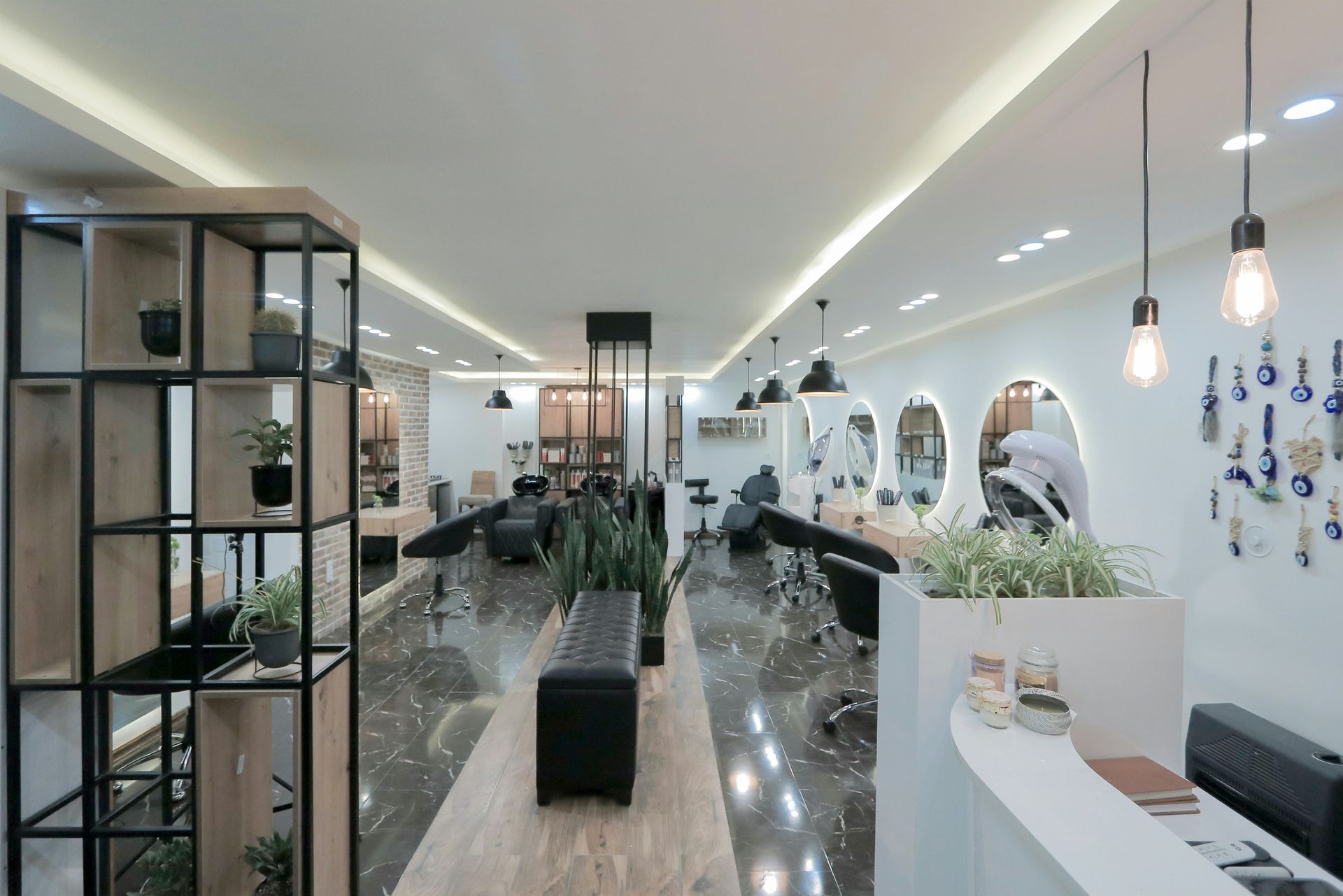
Hello Hair Co. is a salon and barbershop in Londonderry, New Hampshire, built around personalized service, education, and helping clients feel comfortable being themselves.
Our team believes great service starts with listening. Whether you're making a major change or simply trying to keep a color you love looking good between appointments, we want to help you understand your options and find something that actually works for you.
Meet Chloe

Every stylist brings their own personality, perspective, and approach to their work. Chloe loves creating personalized looks, but she's just as interested in helping clients understand their hair and feel confident working with it once they're home.
"Great hair shouldn't only look good when you leave the salon. You should feel confident working with it at home, too."
What do you enjoy most about helping clients with their hair?
I love teaching clients how to style their hair at home. I always get compliments on my curling iron curls, and clients want to know how to recreate them themselves.
I actually learned how to curl my own hair from “YouTube University” when I was 16! So if taking an extra 15 minutes during an appointment to show someone how to properly use a clamp curling iron helps them feel more confident doing their own hair, I'm happy to do it.
Who is your ideal client?
Honestly, I love working with anyone. I really enjoy personalizing a new look for the person in my chair, whether that's a haircut, color, extensions, or something else.
I also love giving clients styling tips and figuring out what will actually work for their lifestyle. Everyone's hair is different, so I don't think everyone should have the same routine.
How do you help someone who's nervous or visiting you for the first time?
I have a pretty calm personality when you first meet me—and honestly, I get nervous meeting new clients too!
I'm very easygoing, though. We'll talk everything through during the appointment, so there's no reason to feel like you need to know exactly what to ask for or have everything figured out before you sit down.
How do you decide what's best for each client?
I consider hair history, density, porosity, texture, and lifestyle.
Someone with fine, straight hair isn't going to have the same routine as someone with coarse, curly hair. I want my recommendations to make sense for your actual hair and your everyday life, while helping you keep your hair as healthy as possible.
What's one hair misconception you hear all the time?
That blondes need to use purple shampoo every time they wash their hair.
I don't recommend that. For most of my clients, purple shampoo is something I'd use much less frequently. Overusing it can leave the blonde looking dull and contribute to buildup, so more isn't always better.
What's one piece of advice you wish every client knew?
Heat protectant isn't optional if you're heat styling your hair.
I like aerosol heat protectants on dry hair. Living Proof Flex Hairspray is one of my favorites, and for damp hair I like evo Icon Welder because it's easy to spray on after you've towel-dried your hair.
What do you hope every client feels when they leave your chair?
Confident.
I love getting a message from a client afterward telling me how many compliments they've gotten on their hair. It makes them feel amazing, and honestly, it makes me feel amazing too.
What should a new client know about you?
Some of my favorite appointments are lived-in color and extension installs. I'm a little shy when you first meet me, but once you get to know me, I have a pretty bubbly personality—and once you get me talking, I'll probably talk through the whole appointment.
I love teaching just as much as I love learning. Before COVID, I was actually in school to become an elementary school teacher, which probably explains why I enjoy showing clients how to work with their own hair so much.
Outside the salon, I love concerts, traveling, photography, reading, and my dog. I'm also a pretty big nerd about Disney Parks and movies, Star Wars, Marvel, and certain video games.
So...there's usually plenty we can talk about!
Ready to Book with Chloe?
Whether you're considering a new color, extensions, a haircut, or just want some help figuring out what works for your hair, Chloe can help you create something that fits your hair, your lifestyle, and the amount of maintenance you actually want.

Subscribe To Our Newsletter
Stay up-to-date with what’s going on at HELLO HAIR CO. by subscribing to our monthly newsletter.
