
What Determines Your Blonding Timeline
Sometimes you can get close to your dream blonde in a single appointment. Other times, getting there safely takes a few sessions. Your starting color, hair history, goals, and hair condition all help determine the right approach.
Created in collaboration with Madison, a stylist at Hello Hair Co. who loves blonding and custom color.
Quick Answer
Can you go blonde in one appointment? Sometimes.
If you're starting with relatively light, untreated hair and your goal isn't dramatically different from your current color, a stylist may be able to get you very close in one session. But darker starting colors, previous permanent color, box dye, multiple layers of artificial color, or previous lightening can complicate the process.
Madison doesn't look at blonding as a simple yes-or-no question. She looks at where your hair is today, where you want it to go, and the best way to get there without pushing your hair too far.
As she explains it, “I try to make it feel more like a plan instead of telling them they can't have what they want.”
Key Takeaways
- Not everyone can, or should, reach their dream blonde in one appointment.
- Your natural level, current color, previous color, and overall condition all affect how your hair will lighten.
- Hair doesn't go directly from dark to blonde. It moves through stages of underlying warmth as it lightens.
- An inspiration photo gives your stylist much more information than “how blonde” you want to be.
- If your final goal isn't realistic in one appointment, your stylist can create a plan for getting there over multiple sessions.
- Maintenance, budget, and what you're willing to do at home should be part of the conversation before you start.
Why Can Some People Go Blonde in One Appointment?
No single blonding timeline works for everyone.
When Madison meets someone who wants to go blonde, she starts by asking about their hair history, how often they're willing to come back for maintenance, their budget, and whether they have inspiration photos.
Then she looks at the hair in front of her.
Someone with untreated, or “virgin”, hair may have a very different starting point from someone with permanent color, demi-permanent color, box dye, or previous blonding. Their natural level matters too, because it helps determine how much lightening will be needed to reach the desired result.
Hair condition matters just as much.
If the starting point and goal align, you may make significant progress in one appointment. But blonding isn't just about getting the hair as light as possible. It's about deciding what makes sense for this person's hair.
Your Hair History Matters More Than You Might Think
One of the most important parts of a blonding consultation is talking honestly about what's already been done to your hair.
That includes salon color, box dye, demi-permanent color, previous highlights or blonding, and other color services even if they happened a while ago.
Why?
Because what's underneath your current color can affect how your hair responds when you lighten it.
Previous artificial color may need to be worked through or removed, and different areas of the hair can respond differently depending on what's been done to them before. Madison says this can contribute to unwanted warmth or uneven lifting.
That's why the question isn't simply, “What color is your hair right now?”
Your stylist needs the story behind that color.
If you're unsure exactly what was used in the past, that's okay. Tell your stylist what you remember. The goal isn't to judge what you've done to your hair—it's to give your stylist the information they need to make a better plan.
What Does It Mean When a Stylist Says Your Hair Has to “Lift”?
Going from dark hair to blonde isn't like changing a paint color.
As Madison explains it:
“Your hair doesn't go straight from dark to blonde. As we lighten it, it goes through different stages of warmth, like red, orange, yellow, and eventually a pale yellow.”
The darker your starting point, or the more artificial color you're working through, the more of those stages you may encounter on the way to your goal.
That doesn't necessarily mean something has gone wrong.
It means lightening is a process.
Sometimes the hair can move through enough of those stages during one appointment to reach the desired blonde. Sometimes getting all the way there requires pushing the hair further than Madison is comfortable taking that day.
That's when the conversation shifts from “Can we do this?” to “What's the best way for us to get there?”
Your Inspiration Photo Is More Than a Picture of Blonde Hair
Bringing inspiration photos to your blonding consultation can be incredibly helpful, but Madison isn't only looking at how light the hair is.
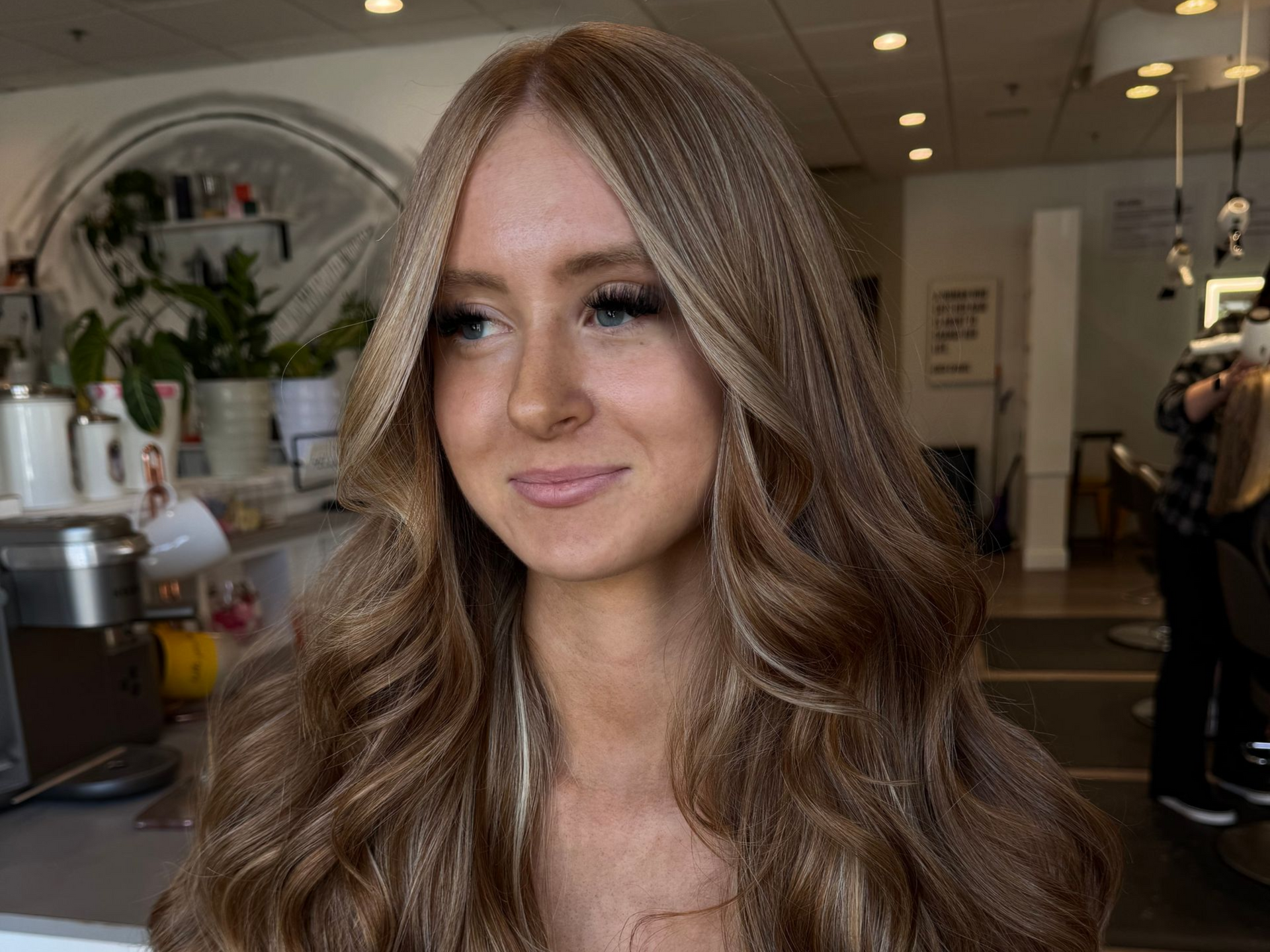
She's looking at the tone. Is it warm, cool, beige, creamy, or something else?
She's looking at brightness and dimension. Is the hair extremely bright throughout, or is some of the client's natural color left behind to create contrast?
She's looking at placement. Where are the lightest pieces? How bright is the hair around the face? How blended is everything?
And then she's comparing all of that with the hair sitting in her chair.
Two clients could show Madison the same inspiration photo and require completely different services to get there. One may already have a starting color that's relatively close. The other may be several stages away or have previous color that needs to be worked through first.
The destination may look the same.
The route doesn't have to be.
What Happens If Your Dream Blonde Isn't Possible That Day?
This is where Madison's approach to blonding matters most.
She doesn't want the conversation to feel like she's simply telling someone no.
“I try to make it feel more like a plan instead of telling them they can't have what they want. I'll explain what I'm seeing in their hair, what I think we can safely accomplish that day, and how we can work toward their inspiration over time.”
That first appointment can still make a meaningful difference.
Madison has worked with clients who came in with darker hair and significant previous color and wanted to go much lighter. Instead of trying to force the final result in one appointment, she starts with a partial or full foil to begin lightening the hair, then uses a toner to bring the result closer to the desired tone.
From there, she can see how the hair responded and use that information to plan the next appointment.
Over time, the client can move closer to the original goal without trying to do everything at once.
Sometimes the Plan Changes During the Appointment
Even a thorough consultation can't tell your stylist exactly how every strand of hair will respond once the lightening process begins.
Madison continually checks the hair while it's processing. She's not only watching the color, but she's watching how the hair itself is responding.
If she sees signs it's time to stop, she may rinse sooner, change her technique, or decide enough lightening has been done for that appointment.
That can mean leaving a little more depth or warmth than originally planned.
For Madison, that's preferable to chasing a particular shade at the expense of hair condition.
Her goal is still the blonde you talked about during the consultation. Sometimes protecting that long-term goal means knowing when today's appointment has accomplished enough.
A Multi-Appointment Blonde Is Still Progress
Needing multiple appointments doesn't mean the first one failed.
It means the first appointment is part of the plan.
Madison wants clients to leave feeling like they've made progress toward their goal even when they aren't at the final result yet. That could mean becoming noticeably lighter, creating brighter pieces around the face, breaking through some previous color, adjusting the tone, or beginning to build the dimension seen in the inspiration photo.
Then the hair gets some time before another lightening service.
How much time depends on what was done and how the hair is doing. During that period, Madison recommends focusing on good home care: professional products designed for color-treated or lightened hair, conditioning and treatments when appropriate, limiting excessive heat, and using heat protectant when styling.
The next appointment can then build on the work that was already done rather than starting over.
The Blonde You Choose Determines the Maintenance Too
Getting blonde is only part of the conversation. Madison also wants to know how you want to live with it afterward.
A lived-in blonde can generally offer a softer grow-out because more of the natural root is incorporated into the finished look. That can work well for someone who doesn't want to be back in the salon constantly.
A very bright or more all-over blonde usually requires more maintenance because the grow-out becomes noticeable sooner.
Neither is inherently better.
The better choice is the one that gives you a look you love and a maintenance schedule you're actually comfortable keeping.
That's why Madison asks about maintenance and budget before she starts, not after you've already committed to a result.
What Does Toner Do for Blonde Hair?
Toner is another part of blonding that can be confusing, especially because it's sometimes talked about as though it makes hair lighter.
It doesn't.
“Toner is basically used to refresh the blonde and adjust the tone,” Madison explains. “It can cancel out unwanted yellow, orange, or brassiness and bring the blonde back to the tone we want.”
Think back to that inspiration photo. Maybe the blonde isn't just light; it's creamy, beige, cool, or warm.
Lightening helps get the hair to the appropriate level. Toner helps Madison refine the blonde's tone.
Toner can also help between larger blonding appointments when the lightness is still working, but the tone needs refreshing.
And No, Purple Shampoo Doesn't Make You Blonder
This is one of those things Madison wishes more clients understood.
Purple shampoo can help neutralize unwanted yellow tones in blonde hair. It does not lighten your hair, and it isn't a replacement for toner or a blonding service.
More isn't necessarily better, either.
Madison doesn't recommend treating purple shampoo like an everyday shampoo simply because your hair is blonde.
Overusing it can leave some blondes looking dull or overly ashy.
It's a maintenance tool.
Whether you need it and how often you should use it depends on your particular blonde and what you're trying to maintain.
What You Do at Home Matters
The blonding process doesn't end when you leave the salon.
Madison recommends using good professional products, avoiding unnecessary washing, using heat protectant when styling with heat, and keeping up with regular trims.
This becomes especially important when you're working toward a larger blonding goal over several appointments.
You're asking more of your hair during a lightening service. How you treat it between appointments becomes part of the bigger plan.
And if something isn't working? Tell your stylist.
Your home routine, styling habits, maintenance schedule, and even how often you're willing to come to the salon can all influence what kind of blonde makes the most sense for you.
Don't Forget to Talk About the Commitment
Madison thinks clients should ask more questions about what happens after they become blonde.
How often will you need to come back?
Will you need toner appointments between larger services?
What products will you need at home?
How many appointments might it take to reach the original goal?
What will maintaining that result realistically cost?
These questions aren't meant to talk you out of going blonde. They're how you make sure the blonde you're choosing actually fits your life.
“I think it's important to be upfront that becoming blonde can sometimes be a process,” Madison says. “There's also ongoing maintenance like toners, touch-ups, and products at home, so I like to make sure clients know what the commitment looks like before we start.”
So…Can You Go Blonde in One Appointment?
Maybe.
And that's actually a much more useful answer than an automatic yes.
Madison wants to see your hair, hear its history, understand the blonde you're picturing, and talk about how much maintenance you want to take on. From there, she can tell you what she realistically thinks she can accomplish during your first appointment.
If your dream blonde is within reach that day, great.
If it isn't, that doesn't automatically mean you can't have it.
It means you need a plan.
As Madison puts it:
“My goal is to get you as close as we safely can today and have a plan for the rest.”
Frequently Asked Questions
Can I go from brunette to blonde in one appointment?
Sometimes significant lightening can happen in one appointment, but reaching a specific blonde depends on your starting color, natural level, previous color, current condition, and the blonde you're trying to achieve. Darker hair or hair with previous artificial color may require multiple appointments.
Why does my stylist need to know if I've used box dye?
Previous color can affect how the hair responds during lightening. Box dye, permanent color, and multiple layers of previous color can make lifting less predictable, so giving your stylist an accurate hair history helps them create a more informed plan.
Why does my hair look warm while it's being lightened?
Hair moves through underlying warm tones as it lightens. Depending on your starting point, that can include red, orange, yellow, and eventually pale yellow. Your stylist considers those stages when deciding how far to lighten and how to tone the finished result.
Does toner make blonde hair lighter?
No. Toner adjusts or refreshes the tone of already-lightened hair. It can help neutralize unwanted yellow, orange, or brassy tones, but it doesn't replace the lightening process.
Will purple shampoo make my hair blonder?
No. Purple shampoo can help neutralize some yellow tones, but it doesn't lighten the hair. Madison recommends thinking of it as a maintenance product rather than something that replaces toner or a blonding appointment.
How many appointments will it take to get my dream blonde?
There isn't one number that applies to everyone. Your starting color, previous color history, condition, desired result, and how your hair responds during each appointment can all affect the timeline. A consultation gives your stylist a much better idea of what your individual process may look like.
Is lived-in blonde lower maintenance than bright blonde?
It can be. Lived-in blonding generally incorporates more of the natural root, creating a softer grow-out. A very bright or all-over blonde often requires more frequent maintenance because new growth becomes noticeable sooner.
Continue Learning
Why Does My Hair Color Fade So Fast Between Appointments?
Color doesn't stay exactly the same between salon visits. Learn how washing, heat, products, swimming, sun exposure, and your everyday routine can affect your color.
Full Foil vs. Partial Foil: What's the Difference and Which One Is Right for You?
If you're trying to understand what your first blonding appointment might involve, learn how full and partial foils differ and why your stylist may recommend one over the other.
Why Your Hair Never Looks the Same at Home After a Salon Appointment
Your color is only one part of the finished result. Learn how products, tools, technique, and your haircut affect what your hair looks like once you're styling it yourself.
About Hello Hair
Hello Hair Co. is a salon in Londonderry, New Hampshire, built around education, thoughtful consultations, and helping clients make confident decisions about their hair. Our stylists take the time to understand your goals, hair history, lifestyle, and maintenance preferences so we can recommend an approach that makes sense for you.
About Madison

Madison loves all types of blonding and custom color, focusing on creating personalized looks that make sense for each client's hair, goals, and maintenance preferences. Her consultations start with listening, understanding what a client wants, looking at their hair history and current condition, and talking honestly about what's realistic before creating a plan.
She wants her chair to feel comfortable, welcoming, and judgment-free, and loves seeing clients leave feeling confident and excited about their hair.



Subscribe To Our Newsletter
Stay up-to-date with what’s going on at HELLO HAIR CO. by subscribing to our monthly newsletter.
